Am I too old for this?
No. MHCC programs are built for working adults, and most of our students are in their
twenties and thirties, coming from retail, food service, or administrative work. You will not
be the oldest person in the room.
How long is the program and what does it cost?
It's 50 clock hours — about three weeks — and tuition is $1,650. The format is hybrid: you
complete the lecture portion online on your own schedule, and the hands-on training happens in
the classroom at our Gardena campus. Flexible payment plans are available, so ask your admissions
advisor which one fits your situation.
Do I need a high school diploma or GED?
Not to enroll here — you can start the EKG Technician program without one. But you should know
the full picture before you commit: the National Healthcareer Association requires a high school
diploma or GED to sit for the CET certification exam. So you can complete the program and earn
your MHCC Certificate of Completion either way, but the certification exam itself will need that
diploma or GED. If you don't have one yet, tell your admissions advisor and they'll talk you
through the order to do things in.
Will I get certified when I finish?
You'll receive an MHCC Certificate of Completion, and the program prepares you to sit for the
NHA Certified EKG Technician (CET) exam. That certification is issued by the National Healthcareer
Association after you pass their exam — it isn't awarded by the school.
Where do EKG Technicians work?
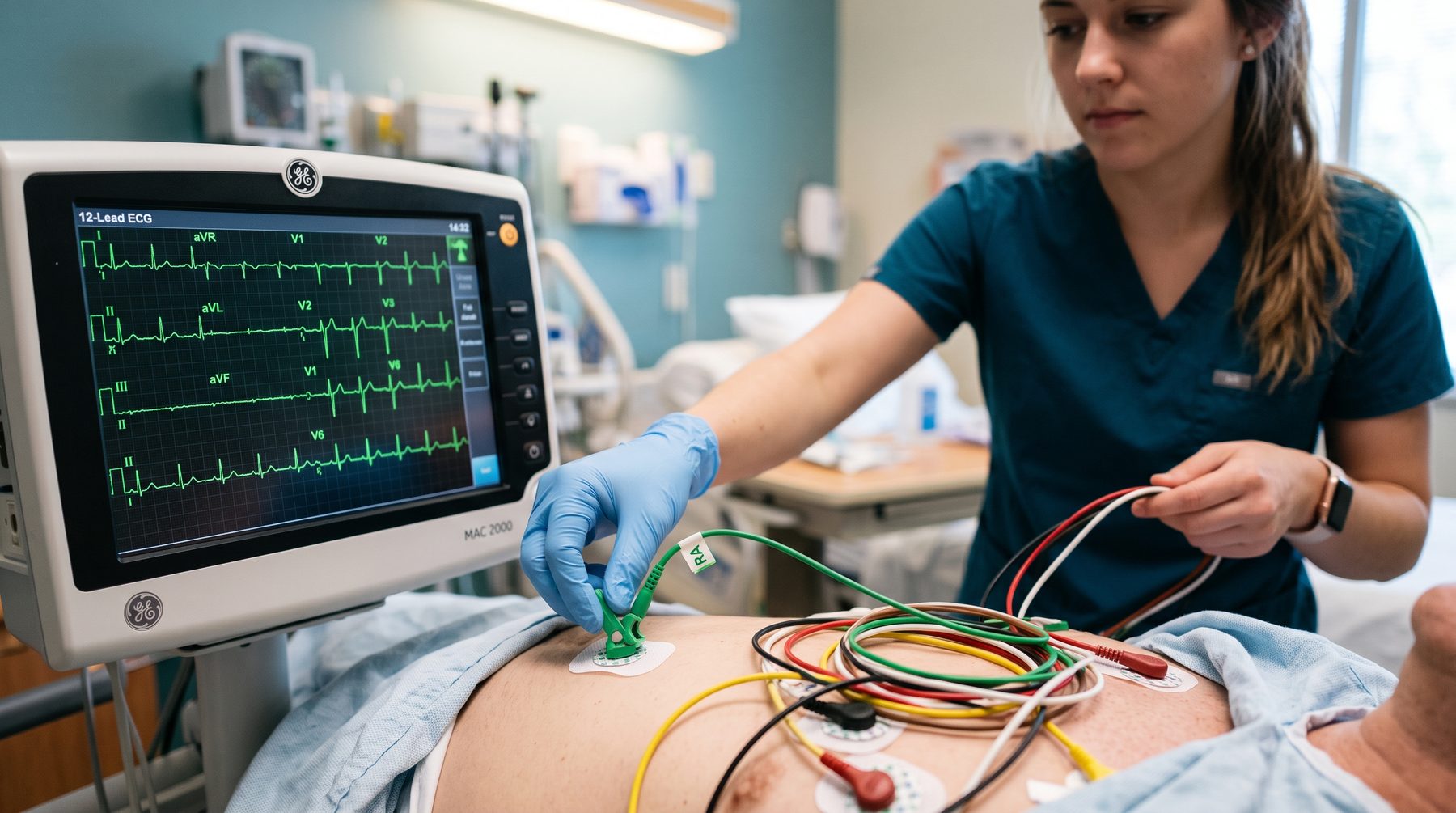
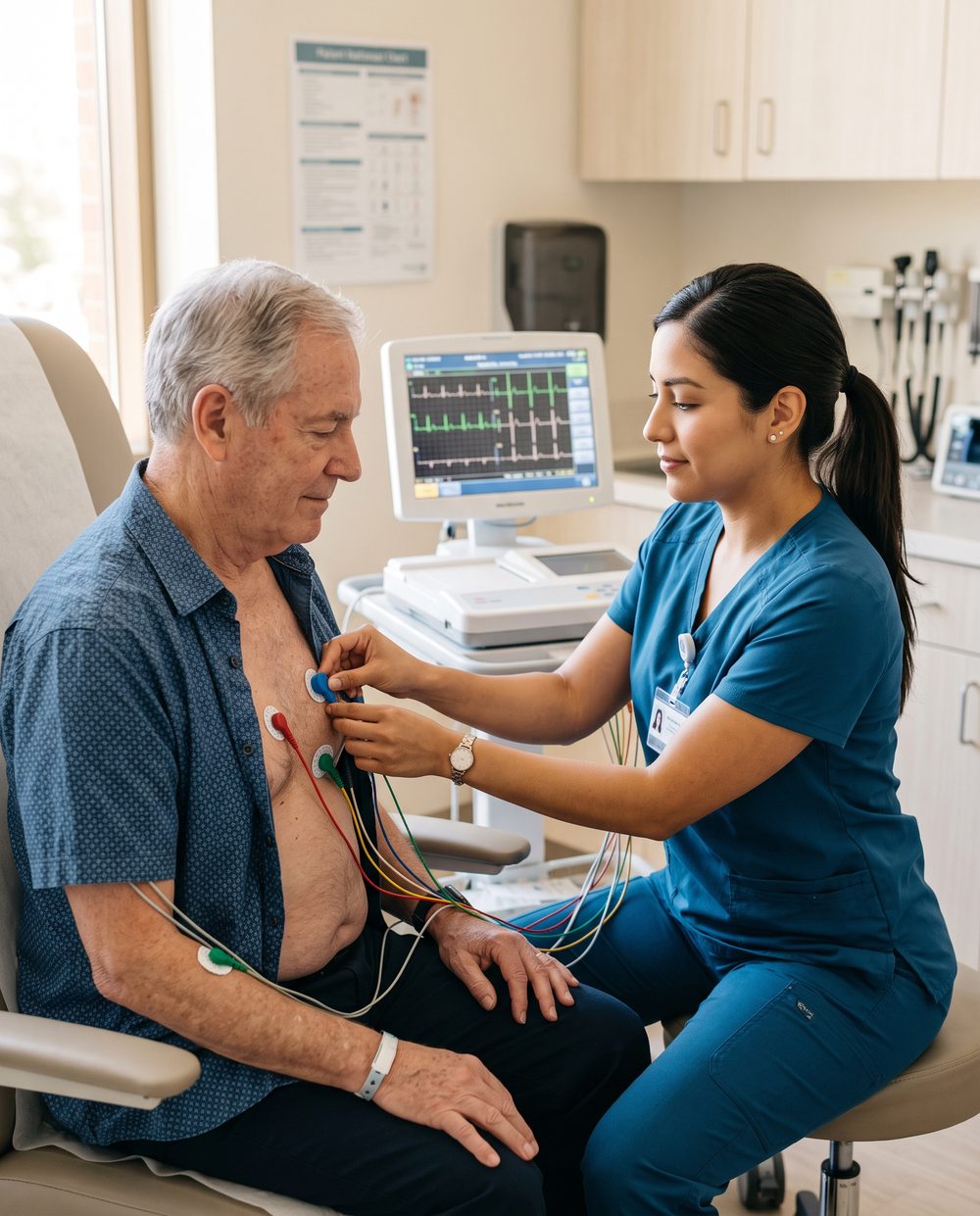
Hospitals, cardiology practices, outpatient clinics, and diagnostic testing centers — anywhere
a 12-lead gets run. It's a specialized technical skill, and the credential travels with you rather
than belonging to one employer. We'll be straight with you: job searching after the program is
yours to drive, and employment is never guaranteed.
Can I do this while I'm still working?
That's exactly what the hybrid format is for. The lecture portion is online, so you move
through it around your shifts, and the on-campus hands-on sessions are the part you schedule
around. Tell your admissions advisor what your week looks like and they'll be straight with you
about whether the upcoming cohort fits.